


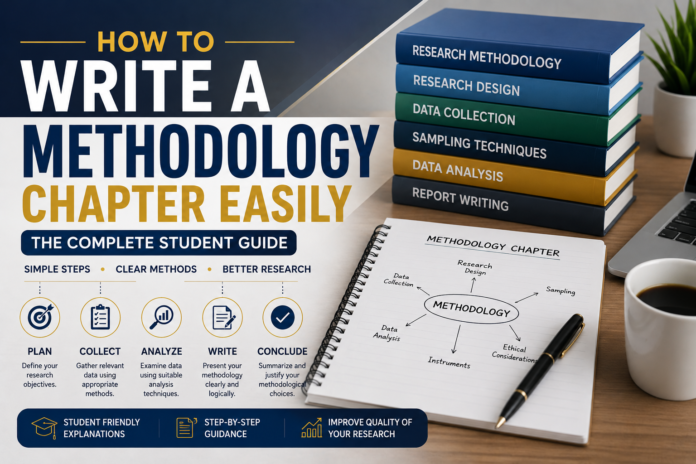
How to Write a Methodology Chapter Easily: The Complete Student Guide Writing a dissertation or research project can feel overwhelming, especially when students reach the methodology chapter. Many students understand their topic well but struggle to explain how they conducted their research. As a result, the methodology chapter often becomes one of the most confusing sections of academic writing.
The good news is that writing a methodology chapter does not have to be difficult. Once you understand its purpose and structure, the process becomes much easier and more manageable. A strong methodology chapter clearly explains your research approach, methods, data collection process, and analysis techniques. It shows readers that your research is reliable, organized, and academically credible. Essay Writing Assignments
In this complete guide, you will learn how to write a methodology chapter easily, including its structure, essential components, research methods, common mistakes, and expert tips to improve your academic writing.
What Is a Methodology Chapter?
A methodology chapter explains how you conducted your research. It describes the methods, techniques, tools, and procedures you used to collect and analyze data.
In simple terms, this chapter answers important questions such as:
- How was the research conducted?
- Why were certain methods chosen?
- How was data collected?
- How was the information analyzed?
- Why is the research reliable?
The methodology chapter is important because it helps readers understand whether your research approach is appropriate for your topic and objectives. Online Essay Writing
How to Write a Methodology Chapter Easily: The Complete Student Guide
Why the Methodology Chapter Matters
Many students focus heavily on the introduction and literature review while underestimating the importance of methodology. However, universities place significant value on research methods because they determine the quality and reliability of your findings.
A strong methodology chapter demonstrates:
- Academic understanding
- Research planning skills
- Critical thinking ability
- Knowledge of research methods
- Reliability of results
Without a clear methodology, even strong research findings may appear weak or untrustworthy.

Understanding the Structure of a Methodology Chapter
Although university requirements may vary, most methodology chapters follow a similar structure. Organizing your chapter properly improves clarity and readability.
Research Philosophy
The first section often explains your research philosophy. This refers to the beliefs guiding your research approach.
Common research philosophies include:
- Positivism
- Interpretivism
- Pragmatism
- Realism
For example, quantitative studies usually follow positivism because they rely on measurable data and objective analysis.
Qualitative studies often use interpretivism because they focus on human experiences and meanings.
You do not need overly complex explanations. Simply explain which philosophy aligns with your research and why.
Research Approach
The research approach explains how your study develops knowledge.
Decuctive Approach
existing theories and tests them through research.
This approach is common in quantitative research.
Inductive Approach
An inductive approach develops new theories based on collected data.
This method is commonly used in qualitative research.
Choose the approach that best fits your research objectives and explain your reasoning clearly.
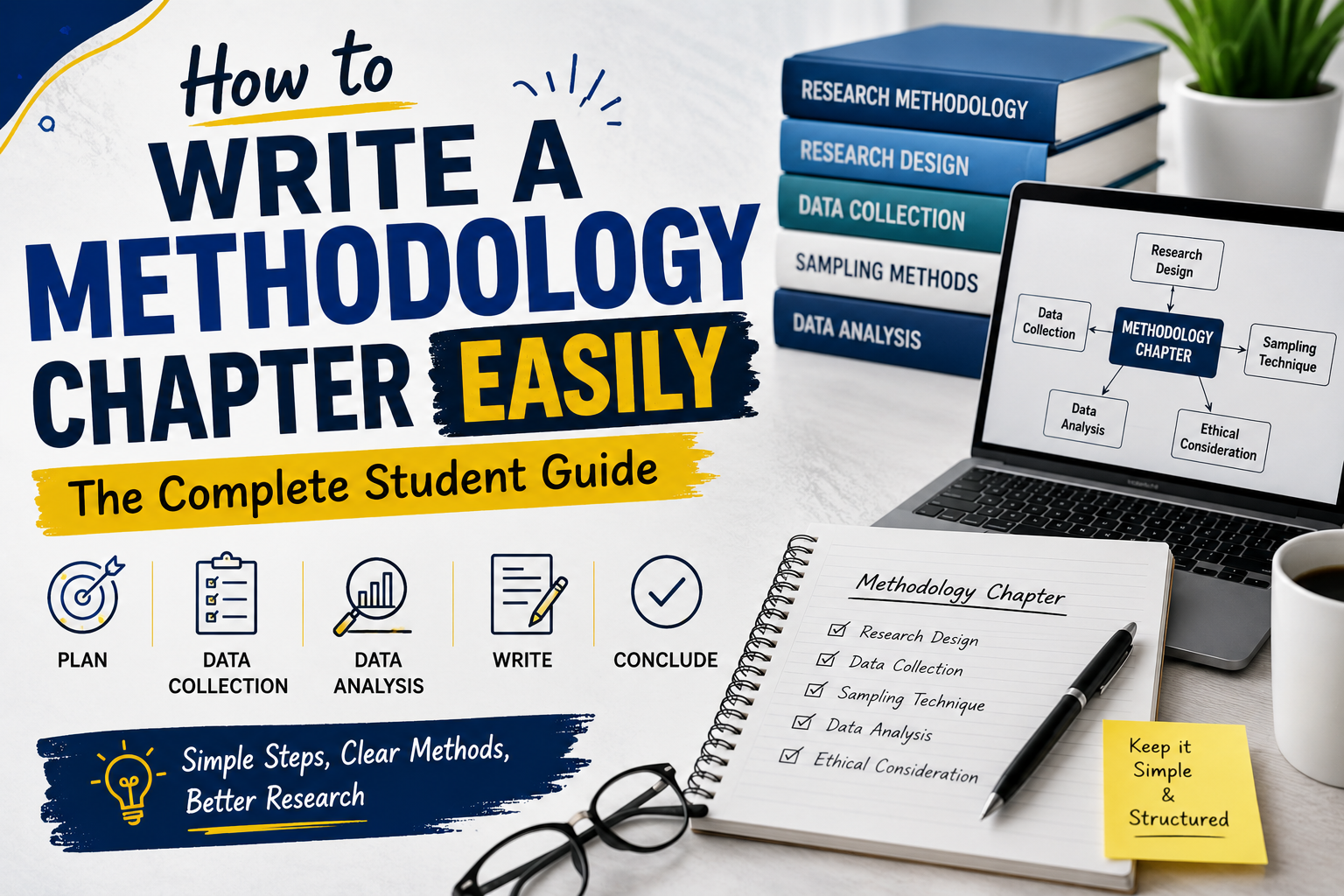
Research Design
The research design describes the overall strategy used to answer your research questions.
Common research designs include:
- Case studies
- Surveys
- Experimental research
- Descriptive research
- Exploratory research
For example, a business management dissertation may use a survey design to analyze employee satisfaction in an organization.
A psychology project may use experimental research to study behavior patterns.
Your research design should align with your objectives and research questions.
Choosing Between Qualitative and Quantitative Research
One of the most important decisions in methodology writing is selecting the appropriate research method.
Qualitative Research
Qualitative research focuses on opinions, experiences, and meanings. It usually involves non-numerical data.
Common qualitative methods include:
- Interviews
- Focus groups
- Observations
This method is useful when exploring human behavior, emotions, or experiences in depth.
Quantitative Research
Quantitative research focuses on numerical data, statistics, and measurable results.
Common quantitative methods include:
- Surveys
- Questionnaires
- Statistical analysis
This method is ideal for testing theories and identifying patterns.
Mixed Methods Research
Some studies combine both qualitative and quantitative methods. This is called mixed methods research.
Using mixed methods can provide a more complete understanding of the research problem.
For example, a student may use questionnaires to collect numerical data and interviews to gather detailed opinions.
Data Collection Methods
The methodology chapter should explain how data was collected.
Primary Data Collection
Primary data is collected directly by the researcher Methodology Chapter.
Examples include:
- Surveys
- Interviews
- Observations
- Experiments
Explain who participated in your study, how participants were selected, and why the method was appropriate.
Secondary Data Collection
Secondary data comes from existing sources such as:
- Journal articles
- Books
- Government reports
- Company records
If you used secondary research, explain how you selected reliable academic sources Methodology Chapter.
Sampling Techniques
Sampling refers to selecting participants for your study.
Probability Sampling
Probability sampling gives all participants an equal chance of selection Methodology Chapter.
Common types include:
- Random sampling
- Systematic sampling
This method is often used in quantitative research.
Non-Probability Sampling
Non-probability sampling selects participants based on convenience or specific criteria.
Examples include:
- Convenience sampling
- Purposive sampling
This method is common in qualitative research Methodology Chapter.
Always explain why your chosen sampling method suits your study.
Data Analysis Techniques
After collecting data, researchers must analyze it properly.
Qualitative Data Analysis
Qualitative data is usually analyzed using:
- Thematic analysis
- Content analysis
- Narrative analysis
For example, interview responses may be grouped into themes to identify common patterns.
Quantitative Data Analysis
Quantitative data often involves:
- Statistical analysis
- Graphs and charts
- Software like SPSS or Excel
Researchers use statistics to identify relationships, trends, or significant findings.
Explain clearly how your data analysis method helped answer your research questions.
Ethical Considerations in Research
Universities expect students to conduct ethical research Methodology Chapter.
Your methodology chapter should mention:
- Participant consent
- Confidentiality
- Data protection
- Voluntary participation
For example, if interviews were conducted, participants should have been informed about the purpose of the study and allowed to withdraw at any time Methodology Chapter.
Including ethical considerations strengthens the credibility of your research.
Reliability and Validity
Reliability and validity help prove that your research findings are trustworthy.
Reliability
Reliability refers to consistency. If the study were repeated, similar results should be obtained.
Validity
Validity refers to accuracy. The research should measure what it intends to measure.
Explain the steps you took to ensure reliable and valid results.
For example:
- Using trusted survey questions
- Avoiding biased language
- Selecting appropriate participants
Common Mistakes Students Make in Methodology Chapters
Many students struggle with methodology writing because they make avoidable mistakes.
Being Too Descriptive
Students sometimes explain methods without justifying them. Universities expect critical reasoning, not just description.
Instead of simply stating what you did, explain why you chose that method.
Lack of Clarity
Complicated explanations can confuse readers. Keep your writing clear, direct, and organized.
Inconsistent Research Methods
Your research method should align with your objectives and questions. For example, qualitative objectives should not rely entirely on quantitative analysis.
Ignoring Ethical Issues
Failing to mention ethics can weaken your research credibility.
Weak Academic Sources
Support your methodology choices with academic references whenever possible.
Tips to Write a Strong Methodology Chapter Easily
Writing methodology becomes easier when you follow a structured approach.
Understand Your Research Questions
Your methodology should directly support your research objectives.
Before writing, ask yourself:
- What data do I need?
- How will I collect it?
- How will I analyze it?
Keep the Structure Logical
Use headings and subheadings to organize your content clearly.
This improves readability and helps lecturers follow your discussion.
Use Academic Language
Maintain a formal academic tone throughout the chapter.
Avoid casual expressions or vague statements.
Justify Every Choice
Do not simply mention your methods. Explain why each method was selected and how it supports your research goals.
Review University Guidelines
Different universities may have specific formatting requirements. Always check your institution’s dissertation handbook before finalizing your chapter.
Example of a Simple Methodology Paragraph
Here is a basic example of methodology writing:
This study used a quantitative research approach to examine student satisfaction with online learning. Data was collected through online questionnaires distributed to 100 university students. A random sampling technique was used to reduce selection bias. The collected data was analyzed using descriptive statistics in Microsoft Excel.
This example is simple, clear, and academically appropriate.
How Long Should a Methodology Chapter Be?
The length depends on your academic level and university guidelines.
Generally:
- Undergraduate dissertation: 1000–2000 words
- Master’s dissertation: 2000–4000 words
- PhD thesis: significantly longer
Focus more on quality and clarity rather than unnecessary length.
Final Thoughts
Writing a methodology chapter may seem difficult at first, but understanding its purpose and structure makes the process much easier. A strong methodology chapter explains your research methods clearly, justifies your choices, and demonstrates academic credibility.
Remember that the goal is not to sound overly complicated. Instead, focus on clarity, organization, and logical explanation. Choose methods that align with your research objectives and explain them confidently.
By following the strategies discussed in this guide, students can create methodology chapters that are professional, well-structured, and academically strong. With proper planning, careful analysis, and consistent proofreading, writing a methodology chapter can become one of the most manageable parts of your dissertation.
You can also explore our related guides on dissertation writing, literature reviews, and research proposal writing to strengthen your overall academic writing skills.


[…] How to Write a Methodology Chapter Easily: The Complete Student Guide […]