


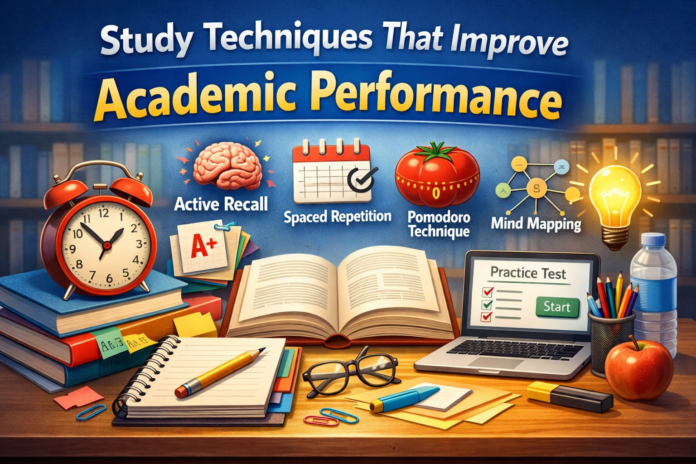
Introduction to Study Techniques That Improve Academic Performance
Academic success is a goal shared by students across all levels of education, yet achieving it requires more than just attending classes and completing assignments. The real difference lies in adopting the right study techniques that improve academic performance, allowing students to learn efficiently, retain information longer, and apply knowledge effectively in exams and real-life situations. Many students struggle not because they lack intelligence, but because they rely on outdated or ineffective study habits that do not align with modern learning demands. Understanding and implementing proven strategies can dramatically enhance both productivity and results. In today’s competitive academic environment, mastering the right study techniques is essential for maintaining high grades and reducing stress.students also read about academic success:

Understanding the Importance of Effective Study Techniques
Why Study Techniques Matter
Using effective study techniques that improve academic performance is crucial because it transforms the way students process and understand information. Instead of passive learning, such as simply reading textbooks or highlighting notes, modern study methods focus on active engagement, critical thinking, and repetition. These approaches help in strengthening memory and improving comprehension, which are key factors in academic success. When students apply structured techniques, they are better able to manage their time, reduce procrastination, and build confidence in their abilities.
The Science Behind Learning
How the Brain Retains Information
The human brain processes and stores information more effectively when it is actively involved in learning. Techniques such as spaced repetition, active recall, and visualization align with cognitive science principles, making them powerful tools for improving academic outcomes. When students repeatedly review material over time instead of cramming, they enhance long-term memory retention. Similarly, testing oneself on learned material forces the brain to retrieve information, strengthening neural connections and improving recall during exams.
Proven Study Techniques That Improve Academic Performance
Active Recall Method
Active recall is one of the most effective study techniques that improve academic performance because it requires students to actively retrieve information from memory rather than passively reviewing it. This can be done through practice questions, flashcards, or self-quizzing. By consistently challenging the brain to recall information, students reinforce their understanding and identify knowledge gaps that need further attention. This method is particularly useful for subjects that require memorization, such as science, medicine, and law.
Spaced Repetition Strategy
Spaced repetition involves reviewing information at increasing intervals over time, ensuring that knowledge is retained in long-term memory. This technique prevents the forgetting curve and allows students to revisit material just before they are likely to forget it. Digital tools and apps can assist in scheduling these review sessions, making it easier for students to stay organized. Incorporating spaced repetition into daily study routines can significantly boost academic performance and reduce last-minute exam stress.
The Pomodoro Technique
The Pomodoro Technique is a time management strategy that enhances focus and productivity. It involves studying for 25 minutes followed by a 5-minute break, with longer breaks after several cycles. This method helps students maintain concentration while avoiding burnout. By breaking study sessions into manageable intervals, students can stay motivated and complete tasks more efficiently. This technique is especially helpful for those who struggle with distractions or long study hours.
Effective Note-Taking Methods for Better Learning
The Cornell Note-Taking System
The Cornell method is a structured approach to note-taking that divides the page into sections for notes, cues, and summaries. This system encourages students to organize information logically and review it effectively. By summarizing key points and writing questions, students engage with the material more deeply, improving comprehension and retention.
Mind Mapping Technique
Mind mapping is a visual learning strategy that helps students connect ideas and concepts. By organizing information in a diagram format, students can see relationships between topics more clearly. This technique is particularly useful for brainstorming, planning essays, and revising complex subjects.
Digital vs Handwritten Notes
Which is More Effective?
Both digital and handwritten notes have their advantages. Handwritten notes improve memory retention because they require more cognitive processing, while digital notes offer convenience and easy organization. The choice depends on the student’s learning style, but combining both methods can provide the best results.
Time Management Strategies for Academic Success
Creating a Study Schedule
A well-structured study schedule is essential for implementing study techniques that improve academic performance effectively. Planning study sessions in advance helps students allocate time for each subject and avoid last-minute cramming. A balanced schedule also includes breaks, revision time, and extracurricular activities, ensuring overall well-being.
Setting SMART Goals
SMART goals (Specific, Measurable, Achievable, Relevant, Time-bound) provide a clear roadmap for academic success. By setting realistic targets, students can track their progress and stay motivated. For example, instead of aiming to “study more,” a SMART goal would be to “complete two chapters of biology within three days.students also visit this website for more information.https://onlineessaywriting.co.uk/wp-admin/post.php?post=710&action=edit
Avoiding Procrastination
Procrastination is a major barrier to academic success. Overcoming it requires discipline, self-awareness, and the use of effective study techniques. Breaking tasks into smaller steps, setting deadlines, and rewarding progress can help students stay on track and maintain productivity.
Creating an Ideal Study Environment
Minimizing Distractions
A distraction-free environment is crucial for effective learning. Students should choose a quiet place, turn off unnecessary notifications, and keep their study area organized. Eliminating distractions allows for better focus and improved efficiency.
Importance of Lighting and Comfort
Proper lighting and comfortable seating can significantly impact concentration and productivity. A well-lit study space reduces eye strain, while ergonomic furniture supports long study sessions without discomfort.
Using Technology Wisely
Tools That Enhance Learning
Technology can be a powerful tool when used correctly. Educational apps, online resources, and digital planners can support study routines and improve organization. However, students must avoid excessive use of social media and other distractions during study time.
The Role of Healthy Habits in Academic Performance
Sleep and Academic Success
Adequate sleep is essential for memory consolidation and cognitive function. Students who maintain a consistent sleep schedule perform better academically and are more focused during study sessions.This is where professional services like Essay Writing Assignments become invaluable
Nutrition and Brain Function
A balanced diet provides the nutrients needed for optimal brain performance. Foods rich in omega-3 fatty acids, vitamins, and antioxidants support memory and concentration, enhancing the effectiveness of study techniques.
Physical Activity and Focus
Regular exercise improves blood flow to the brain, boosting concentration and reducing stress. Incorporating physical activity into daily routines can enhance overall academic performance.
Group Study vs Individual Study
Benefits of Group Study
Group study sessions allow students to share knowledge, discuss ideas, and gain different perspectives. This collaborative approach can improve understanding and make learning more engaging.
You may also read about:Online Essay Writing services in UK
Advantages of Studying Alone
Studying alone provides a quiet environment for deep focus and personalized learning. It allows students to work at their own pace and concentrate on areas that need improvement.
Finding the Right Balance
Choosing What Works Best
The choice between group and individual study depends on personal preferences and learning styles. Combining both approaches can offer the benefits of collaboration and independent learning.
Exam Preparation Strategies That Work
Practice with Past Papers
Practicing past exam papers helps students understand the format and types of questions they may encounter. It also improves time management and boosts confidence.
Revision Techniques

Effective revision involves summarizing key points, reviewing notes, and using active recall methods. Regular revision ensures that information is retained and easily accessible during exams.
Managing Exam Stress
Staying Calm and Focused
Managing stress is essential for performing well in exams. Techniques such as deep breathing, positive thinking, and proper preparation can help students stay calm and confident.
Conclusion: Mastering Study Techniques That Improve Academic Performance
In conclusion, adopting the right study techniques that improve academic performance is essential for achieving academic success in today’s demanding educational landscape. By incorporating methods such as active recall, spaced repetition, effective note-taking, and time management, students can significantly enhance their learning efficiency and outcomes. Additionally, maintaining a healthy lifestyle, creating a productive study environment, and managing stress are equally important in supporting academic growth. Success is not determined by how long students study, but by how effectively they use their time and resources. By consistently applying these proven strategies, students can unlock their full potential and achieve their academic goals with confidence.

