


Introduction to A Complete Guide to Academic Success
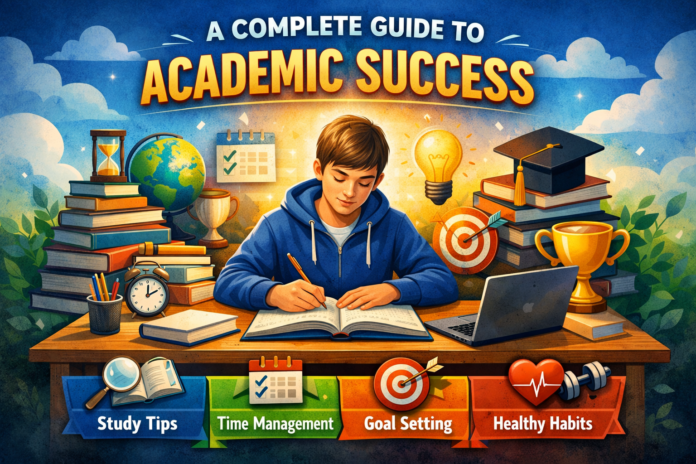
Academic success is a goal that every student aspires to achieve, yet it often feels challenging due to increasing academic pressure, distractions, and time constraints. A complete guide to academic success is not just about studying harder but also about studying smarter, managing time effectively, and maintaining a balanced lifestyle. This guide is designed to help students understand the key elements that contribute to academic excellence, including effective study habits, goal setting, time management, and personal development. By following this complete guide to academic success, students can build a strong foundation for their educational journey and future careers. Academic success is a combination of discipline, motivation, and consistency, and when these elements are aligned, students can achieve remarkable results.
Understanding Academic Success
What Does Academic Success Mean?
Academic success does not only refer to getting high grades; it encompasses a broader perspective of learning, skill development, and personal growth. In a complete guide to academic success, it is important to recognize that success varies from student to student. For some, it may mean achieving top grades, while for others, it may involve improving performance, gaining knowledge, or developing critical thinking skills. Academic success also includes the ability to apply knowledge in real-life situations, communicate effectively, and maintain a positive attitude towards learning. Students who understand the true meaning of success are more likely to stay motivated and committed to their goals.
You may also read:Write your own essay online
Key Components of Academic Success
To fully benefit from a complete guide to academic success, students must focus on several core components. These include effective study techniques, time management, goal setting, self-discipline, and mental well-being. Each of these factors plays a crucial role in shaping a student’s academic journey. For example, time management helps students balance their academic responsibilities with personal life, while self-discipline ensures consistency in their efforts. Similarly, maintaining good mental health is essential for staying focused and motivated throughout the academic journey.https://dissertation.services/wp-admin/post.php?post=1063&action=edit
Setting Clear Goals for Academic Success
Importance of Goal Setting
Goal setting is a fundamental aspect of a complete guide to academic success. Without clear goals, students may struggle to stay focused and motivated. Setting specific, measurable, achievable, relevant, and time-bound (SMART) goals helps students create a clear roadmap for their academic journey. These goals can include short-term objectives, such as completing assignments on time, as well as long-term aspirations, such as achieving a certain grade or graduating with honors.
Types of Academic Goals
In a complete guide to academic success, it is essential to differentiate between various types of goals. Short-term goals are immediate targets that can be achieved within a few days or weeks, while long-term goals require sustained effort over months or years. Additionally, students should set both academic and personal development goals. Academic goals focus on performance and grades, whereas personal goals may include improving communication skills, building confidence, or developing leadership abilities.
Strategies for Achieving Goals
Achieving goals requires careful planning and consistent effort. Students following a complete guide to academic success should break down their goals into smaller, manageable tasks. This approach makes it easier to track progress and stay motivated. Creating a study schedule, prioritizing tasks, and regularly reviewing progress are effective strategies for achieving academic goals. Moreover, seeking feedback from teachers and peers can help students identify areas for improvement and make necessary adjustments.
Effective Study Techniques
Developing a Study Plan
A well-structured study plan is a key element of a complete guide to academic success. Students should allocate specific time slots for each subject and ensure that they cover all topics systematically. A study plan helps students stay organized and prevents last-minute cramming, which often leads to stress and poor performance. It is important to include breaks in the study plan to maintain focus and avoid burnout.
Active Learning Methods
Active learning is an essential strategy in a complete guide to academic success. Instead of passively reading or memorizing information, students should engage in activities such as note-taking, summarizing, and discussing concepts with peers. Techniques like mind mapping, flashcards, and practice tests can enhance understanding and retention. Active learning encourages critical thinking and helps students develop a deeper understanding of the subject matter.
Avoiding Common Study Mistakes
Many students struggle academically due to ineffective study habits. In a complete guide to academic success, it is important to identify and avoid common mistakes such as procrastination, multitasking, and lack of focus. Procrastination leads to rushed work and increased stress, while multitasking reduces productivity and concentration. Students should create a distraction-free study environment and focus on one task at a time to maximize efficiency.
Time Management Skills
Importance of Time Management
Time management is a crucial component of a complete guide to academic success. Students often face multiple responsibilities, including assignments, exams, extracurricular activities, and personal commitments. Effective time management helps students prioritize tasks, meet deadlines, and maintain a balanced lifestyle. Without proper time management, students may feel overwhelmed and struggle to keep up with their academic workload.
Creating a Daily Schedule
A daily schedule is an effective tool in a complete guide to academic success. Students should plan their day in advance, allocating time for studying, attending classes, completing assignments, and relaxing. Using tools such as planners, calendars, or digital apps can help students stay organized and track their progress. It is also important to set realistic expectations and avoid overloading the schedule.
Overcoming Procrastination
Procrastination is one of the biggest obstacles to academic success. In a complete guide to academic success, students are encouraged to develop strategies to overcome procrastination. These may include setting deadlines, breaking tasks into smaller steps, and rewarding themselves for completing tasks. Developing self-discipline and maintaining a positive mindset can also help students stay focused and productive.
Maintaining Mental and Physical Well-being
Importance of Mental Health
Mental health plays a significant role in a complete guide to academic success. Students who experience stress, anxiety, or burnout may find it difficult to concentrate and perform well academically. It is important to recognize the signs of mental health issues and take proactive steps to address them. Practicing mindfulness, seeking support from friends and family, and maintaining a positive outlook can improve mental well-being.
Physical Health and Academic Performance
Physical health is equally important in a complete guide to academic success. Regular exercise, a balanced diet, and adequate sleep contribute to better concentration, memory, and overall performance. Students should avoid unhealthy habits such as excessive caffeine consumption and lack of sleep, as these can negatively impact their academic performance.
Building a Balanced Lifestyle
A balanced lifestyle is essential for achieving long-term success. In a complete guide to academic success, students are encouraged to allocate time for hobbies, social activities, and relaxation. Engaging in extracurricular activities can help students develop new skills, build confidence, and maintain a healthy work-life balance. A balanced lifestyle not only enhances academic performance but also contributes to overall well-being.
Conclusion: Achieving Academic Excellence
In conclusion, a complete guide to academic success emphasizes the importance of a holistic approach to learning. Academic success is not achieved overnight; it requires consistent effort, dedication, and a willingness to learn and improve. By setting clear goals, adopting effective study techniques, managing time efficiently, and maintaining mental and physical well-being, students can achieve their academic aspirations. This complete guide to academic success serves as a roadmap for students who want to excel in their studies and build a successful future. With the right mindset and strategies, every student has the potential to achieve academic excellence and reach their full potential.


[…] A Complete Guide to Academic Success […]
[…] A Complete Guide to Academic Success […]