


The abstract and introduction are often the first sections examiners read in your dissertation. They set the tone for the entire work and can significantly influence the overall impression of your research. A strong abstract provides a concise yet complete snapshot of your study, while a well-crafted introduction establishes context, justifies your research, and outlines what readers can expect. Together, these sections demonstrate your academic rigor and ability to communicate complex ideas clearly Dissertation Abstract.
Many students underestimate their importance, treating them as afterthoughts. However, when written effectively, they not only satisfy university requirements but also help secure higher marks by showcasing clarity, relevance, and contribution to the field. This comprehensive guide walks you through best practices tailored for UK universities, with practical examples and strategies you can apply immediately Dissertation Abstract.
Understanding the Difference Between Abstract and Introduction
Although they appear near the beginning of your dissertation, the abstract and introduction serve distinct purposes Dissertation Abstract. Essay Writing Assignments
The abstract is a standalone summary of your entire dissertation, typically 150–350 words. It must make complete sense on its own because many readers (including examiners, researchers, and database users) may only read this section. It covers the background, aims, methods, key findings, and conclusions Dissertation Abstract.
The introduction, by contrast, is the first full chapter. It provides deeper context, establishes the research problem, and signposts the structure of the entire dissertation. It is longer (usually 5–10% of the total word count) and leads the reader naturally into the literature review and methodology chapters Dissertation Abstract.
Key Tip: Write the abstract last, after completing the rest of your dissertation. This ensures it accurately reflects your final findings and conclusions Dissertation Abstract.
How to Write an Outstanding Dissertation Abstract
Key Characteristics of a Strong Abstract
Examiners value abstracts that are clear, concise, and informative. Aim for Dissertation Abstract:
- Word count compliance — Check your university guidelines (commonly 200–300 words for Masters, up to 350 for PhD).
- Standalone readability — No citations or undefined acronyms.
- Logical flow — Follow the structure of your dissertation. Online Essay Writing
Recommended Structure for Dissertation Abstract
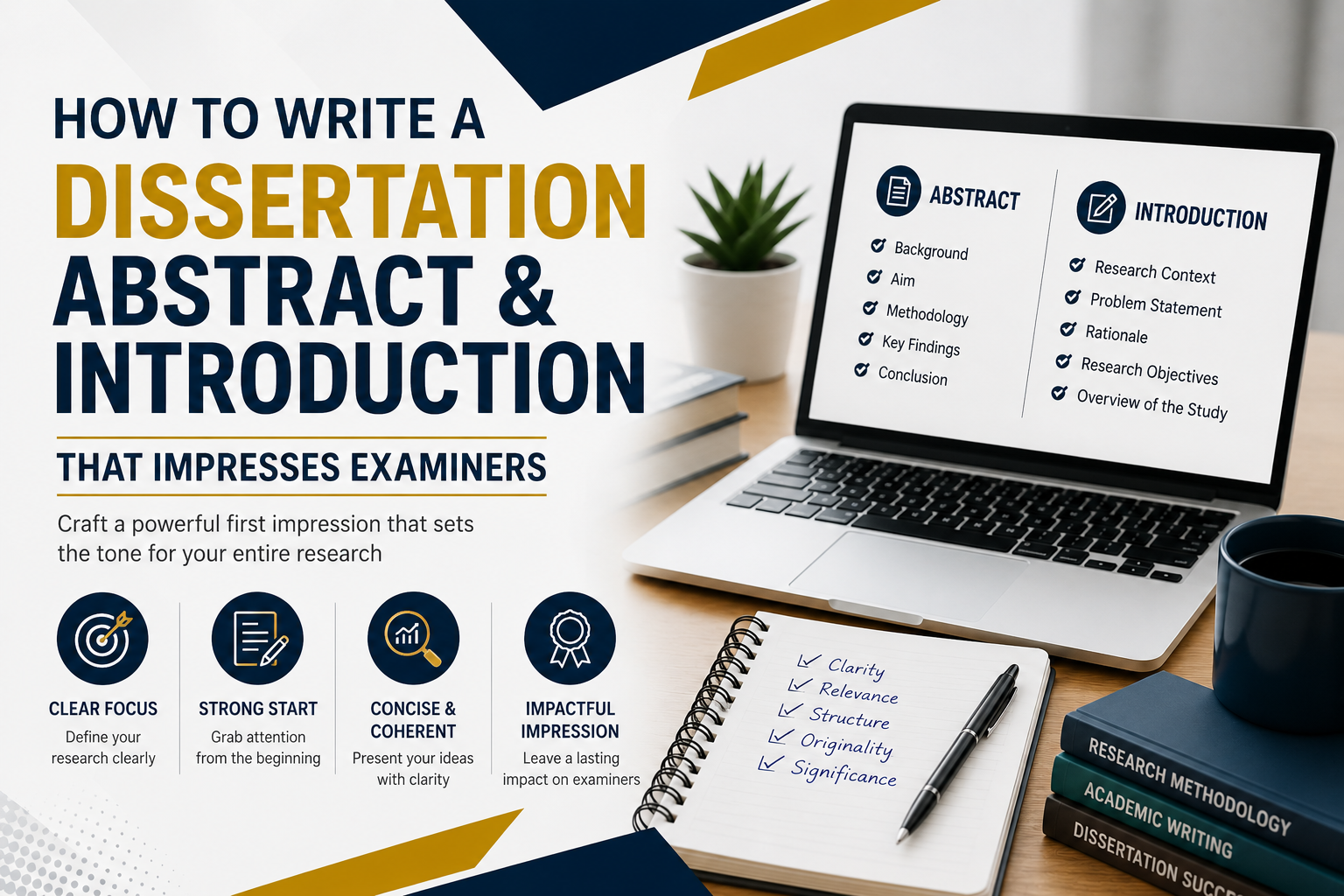
A proven five-part structure works across most disciplines:
- Background and Problem (1–2 sentences) Set the scene and highlight the research gap.
- Aim and Objectives (1 sentence) State what your study sought to achieve.
- Methodology (1–2 sentences) Briefly describe your approach without excessive detail.
- Key Findings (2–3 sentences) Summarise the most important results.
- Conclusions and Implications (1–2 sentences) Highlight contributions and broader significance Dissertation Abstract.
How to Write Critical Analysis in Assignments: The Complete Guide for University Students
Practical Example of a Dissertation Abstract
Topic: The impact of remote working on employee productivity in UK SMEs post-COVID.
“This dissertation examines the effects of remote working practices on employee productivity within small and medium-sized enterprises in the United Kingdom following the COVID-19 pandemic. Despite growing adoption of hybrid models, limited empirical research exists on their long-term implications for UK SMEs. Using a mixed-methods approach, the study combined an online survey of 250 employees with semi-structured interviews of 15 managers. Findings reveal a 12% average increase in reported productivity, attributed to reduced commuting time and greater autonomy, though challenges such as isolation and blurred work-life boundaries persist. The research contributes practical recommendations for optimising hybrid work policies and offers theoretical insights into post-pandemic organisational behaviour. Implications for HR practice and future policy are discussed.”
This example is concise, covers all essential elements, and uses precise language to impress examiners Dissertation Abstract.
Common Mistakes to Avoid in Abstracts
- Including too much background or literature review.
- Using vague statements instead of specific findings.
- Exceeding the word limit.
- Writing it too early in the process.
- Forgetting to align it with the final conclusions.
Pro Tip: After drafting, read your abstract aloud. If it flows naturally and conveys the full story in under a minute, you’re on the right track.
Crafting a Powerful Dissertation Introduction Chapter
The introduction chapter establishes your research’s foundation. Examiners expect it to demonstrate a clear rationale, justified scope, and coherent roadmap Dissertation Abstract.
Essential Elements of a Strong Introduction
Follow this logical progression:
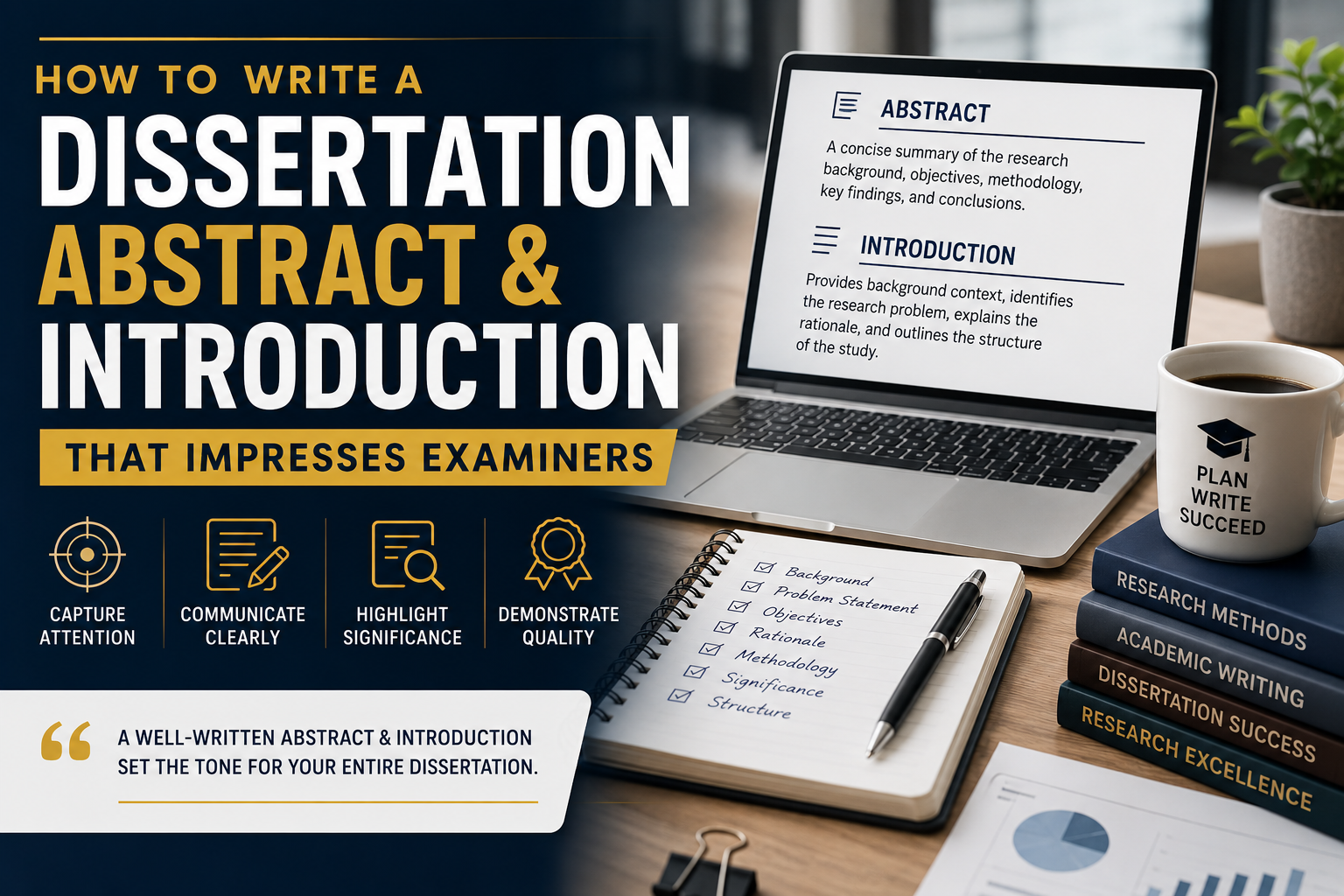
1. Opening Hook and Background Context
Begin with a broad statement about the topic’s relevance, then narrow it to your specific area. Include relevant statistics, recent developments, or real-world problems Dissertation Abstract.
2. Statement of the Research Problem or Gap
Clearly articulate what is missing in existing knowledge. This is where you justify why your study matters Dissertation Abstract.
3. Research Aims, Objectives, and Questions
State your primary aim and break it down into specific, measurable objectives. Include hypotheses if applicable Dissertation Abstract.
4. Significance and Contribution
Explain the theoretical, practical, or policy importance of your work.
5. Scope and Limitations
Define boundaries transparently to manage expectations Dissertation Abstract.
6. Overview of Dissertation Structure
End by briefly outlining each chapter’s content. This signposting helps examiners navigate your work easily Dissertation Abstract.
Example Introduction Opening
“Remote working, once considered a temporary solution, has become a permanent feature of the UK labour market. Following the COVID-19 pandemic, over 40% of employees in small and medium-sized enterprises continue to work hybrid schedules (ONS, 2025). While existing studies highlight benefits in large corporations, comparatively little attention has been paid to the unique challenges faced by SMEs. This dissertation addresses this gap by investigating the impact of remote and hybrid working arrangements on employee productivity, wellbeing, and organisational outcomes in UK SMEs Dissertation Abstract.”
Writing Style Tips for the Introduction
- Use active voice where appropriate for clarity.
- Maintain an academic yet accessible tone.
- Integrate citations smoothly to support key claims.
- Keep paragraphs focused (150–250 words each).
- Ensure smooth transitions between sections.
Step-by-Step Process for Writing Both Sections
- Research University Guidelines — Always check your specific department’s requirements first Dissertation Abstract.
- Outline Thoroughly — Map content before writing.
- Draft the Introduction First — Build the foundation.
- Complete the Full Dissertation — Then return to refine both sections.
- Write the Abstract Last — Ensure perfect alignment.
- Revise Ruthlessly — Focus on clarity, coherence, and conciseness.
- Seek Feedback — Share with your supervisor or professional editors.
- Proofread Carefully — Errors here create a poor first impression.
Advanced Tips to Impress Examiners
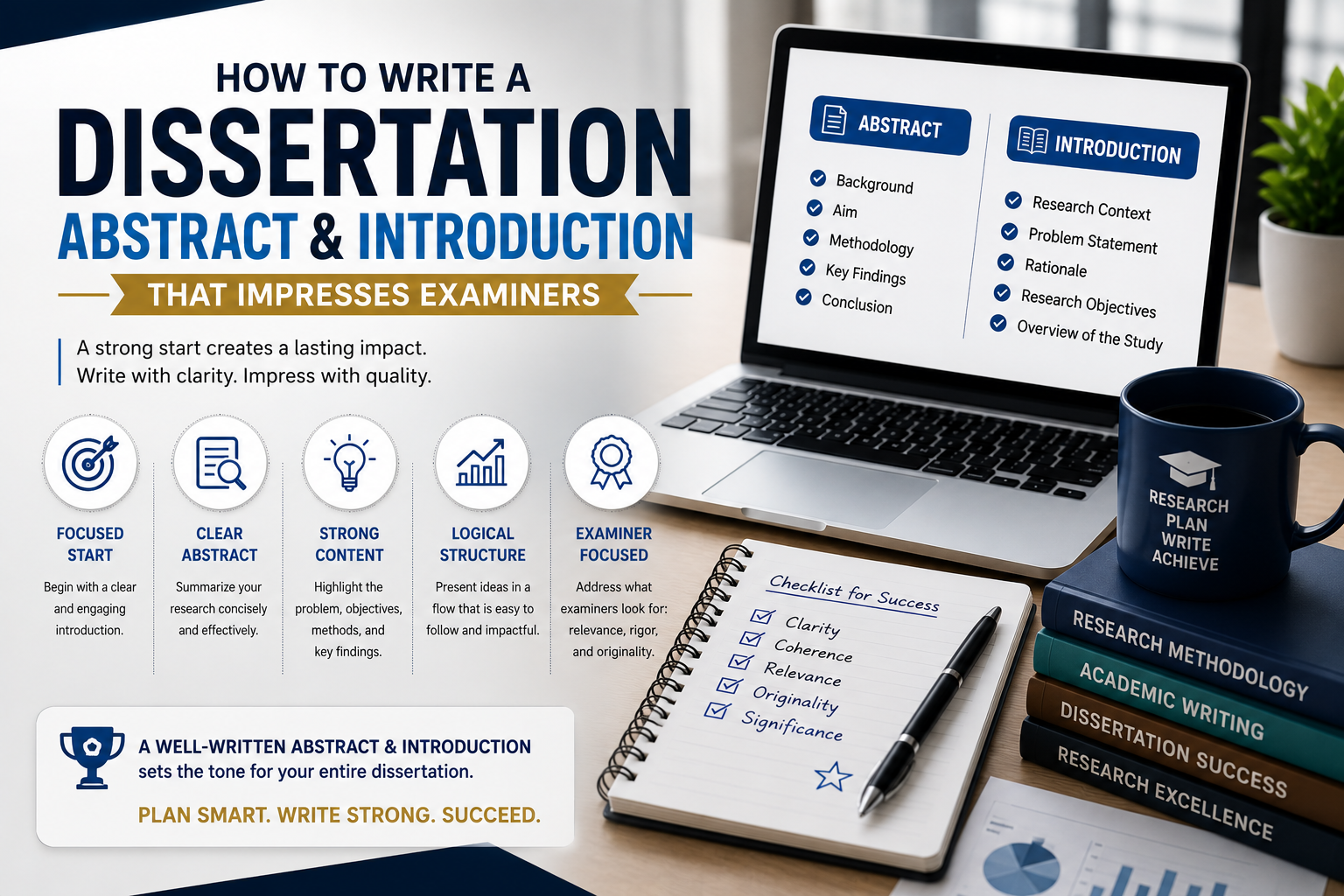
Examiners look for clarity, coherence, and a sense of contribution. Demonstrate these by:
- Explicitly linking your work to current debates Dissertation Abstract.
- Showing methodological awareness early.
- Using precise, confident language.
- Maintaining consistency between abstract, introduction, and conclusions.
- Highlighting originality without exaggeration.
Consider including a visual diagram in the introduction that maps your research design or dissertation structure — this is particularly effective for visual learners and complex studies.
How Professional Support Can Help
Even with the best guidance, balancing dissertation writing with other commitments can be challenging. Many students benefit from expert feedback on structure, academic tone, and alignment with UK university expectations. Whether you need help refining your abstract, strengthening your introduction, or full dissertation support, professional academic writers can provide the targeted assistance needed to achieve excellent results Dissertation Abstract.
Conclusion
Writing a dissertation abstract and introduction that impresses examiners requires careful planning, clear structure, and attention to detail. By treating these sections as strategic opportunities rather than formalities, you set your entire dissertation up for success. Remember: the abstract sells your research, while the introduction establishes your authority as a researcher.
Apply the strategies outlined here, refer back to your university guidelines, and revise iteratively. With dedication and the right approach, your opening sections will not only meet expectations but genuinely captivate your examiners.
Start drafting today — your impressive dissertation begins with these crucial first impressions.


[…] How to Write a Dissertation Abstract & Introduction That Impresses Examiners […]