


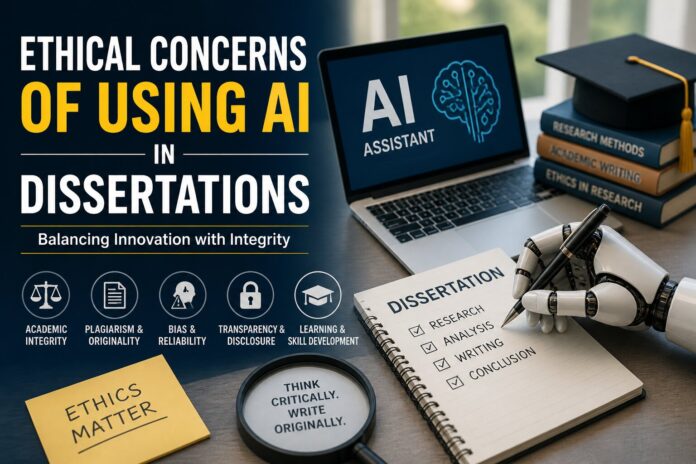
Introduction to Ethical Concerns of Using AI in Dissertations
The rise of artificial intelligence (AI) has significantly transformed academic research and writing practices. From idea generation to proofreading, AI tools now assist students at every stage of dissertation development. While these technologies offer convenience and efficiency, they also raise serious ethical concerns of using AI in dissertations. Universities, educators, and students are increasingly questioning where the line should be drawn between assistance and academic dishonesty. This post explores the ethical dimensions surrounding AI usage in dissertations, highlighting key issues such as plagiarism, authorship, bias, and academic integrity. Students also read that which tools are best for Academic writing and Research.
The Growing Role of AI in Academic Writing
Artificial intelligence tools are now widely used by students to streamline the dissertation process. They can help generate outlines, suggest references, summarize articles, and even produce entire drafts. While this accessibility has democratized academic support, it also introduces risks. Overreliance on AI can undermine critical thinking and independent research skills. The ethical concerns of using AI in dissertations begin when students substitute genuine intellectual effort with automated content generation.
Understanding Academic Integrity
Academic integrity is the cornerstone of higher education. It emphasizes honesty, originality, and responsibility in scholarly work. When students use AI tools without proper acknowledgment, they risk violating institutional policies. Many universities consider uncredited AI-generated content as a form of misconduct. Therefore, understanding how AI fits within academic integrity frameworks is essential to addressing the ethical concerns of using AI in dissertations. Students also read that which tools are best for writing a Dissertation in 2026.
AI as a Tool vs AI as a Substitute
There is a crucial distinction between using AI as a supportive tool and using it as a substitute for original work. Ethical use involves leveraging AI for brainstorming, editing, or improving clarity. Unethical use occurs when students rely on AI to generate entire sections of their dissertation without meaningful input. This blurred boundary contributes significantly to the ethical concerns of using AI in dissertations. Students
Plagiarism and Originality Issues
One of the most pressing ethical concerns is plagiarism. AI-generated content may not always be original, as it is trained on vast datasets that include existing academic work. Even when the output appears unique, it may unintentionally replicate existing ideas without proper citation. Students who submit such content risk academic penalties. Maintaining originality is a fundamental requirement of dissertations, and AI usage complicates this expectation.
Detection Challenges
Detecting AI-generated content is becoming increasingly difficult. Traditional plagiarism detection tools are not always equipped to identify AI-written text. This creates a loophole where unethical practices may go unnoticed. However, many institutions are developing new technologies to address this issue. The ongoing arms race between AI generation and detection tools highlights the complexity of ethical concerns of using AI in dissertations.
Intellectual Property Concerns
AI tools raise questions about intellectual property ownership. Who owns the content generated by AI—the student, the software developer, or the dataset contributors? This ambiguity creates ethical dilemmas. Students must consider whether they can truly claim authorship of AI-generated material, especially in high-stakes academic work like dissertations.
Bias and Reliability of AI Content
AI systems are not free from bias. They reflect the data on which they are trained, which may include outdated or prejudiced information. This can lead to biased or inaccurate content in dissertations. Relying on AI without critical evaluation can compromise the quality and credibility of academic work. Addressing these issues is essential to mitigating the ethical concerns of using AI in dissertations.
Misinformation Risks
AI tools sometimes generate incorrect or misleading information. If students fail to verify AI-generated content, they risk including inaccuracies in their dissertations. This not only affects their grades but also undermines the integrity of academic research. Ethical dissertation writing requires careful validation of all sources, whether human or machine-generated.
Lack of Transparency
Transparency is a key ethical principle in research. When students use AI tools without disclosure, they compromise this principle. Many institutions now require students to declare any use of AI in their work. Failing to do so raises serious ethical concerns of using AI in dissertations and can result in disciplinary action.
Impact on Learning and Skill Development
Dissertations are designed to assess a student’s ability to conduct independent research, analyze data, and present findings. Overdependence on AI tools can hinder the development of these essential skills. Students may graduate without fully mastering the competencies expected at their academic level. This long-term impact is one of the most overlooked ethical concerns of using AI in dissertations.
Critical Thinking Erosion
AI tools can provide quick answers, reducing the need for deep التفكير and analysis. This convenience may discourage students from engaging critically with their research topics. Ethical academic practice requires active intellectual involvement, which cannot be replaced by automated systems.
Unequal Access to AI Tools
Not all students have equal access to advanced AI tools. Some require paid subscriptions, creating a disparity between students who can afford them and those who cannot. This raises fairness issues in academic assessment. Ethical concerns of using AI in dissertations also include the potential for widening educational inequalities.
Institutional Policies and Guidelines
Universities are increasingly developing policies to regulate AI usage in academic work. These guidelines aim to clarify acceptable practices and prevent misuse. However, policies vary widely across institutions, leading to confusion among students. Clear and consistent regulations are necessary to address the ethical concerns of using AI in dissertations effectively.
The Need for Ethical Frameworks
To navigate the complexities of AI usage, institutions must establish robust ethical frameworks. These should include guidelines on disclosure, citation, and acceptable levels of AI assistance. Educating students about these frameworks is equally important. Awareness and understanding are key to promoting ethical behavior.
Role of Educators
Educators play a crucial role in addressing ethical concerns. They must guide students on responsible AI usage and design assessments that prioritize critical thinking over rote content generation. By fostering a culture of integrity, educators can help mitigate the risks associated with AI in dissertations.
Balancing Innovation and Ethics
AI is undeniably a powerful tool that can enhance academic productivity. However, its benefits must be balanced with ethical considerations. Students should use AI to support their work, not replace their intellectual efforts. Striking this balance is essential to maintaining the credibility of academic research.
Responsible AI Usage
Responsible usage involves transparency, proper citation, and critical evaluation of AI-generated content. Students should treat AI as a помощник rather than an author. By doing so, they can harness its benefits while avoiding ethical pitfalls.
Future Implications As AI continues to evolve, its role in academia will expand. This makes it even more important to address ethical concerns proactively. Future graduates must be equipped not only with technical skills but also with a strong ethical foundation. The discussion around ethical concerns of using AI in dissertations will remain relevant for years to come.
Conclusion: Navigating Ethical Concerns of Using AI in Dissertations
The ethical concerns of using AI in dissertations are complex and multifaceted. Issues such as plagiarism, bias, authorship, and academic integrity require careful consideration. While AI offers valuable support, it must be used responsibly and transparently. Students, educators, and institutions must work together to establish clear guidelines and promote ethical practices. Ultimately, maintaining the integrity of academic work is paramount, and this responsibility lies with everyone involved in the educational process.

