


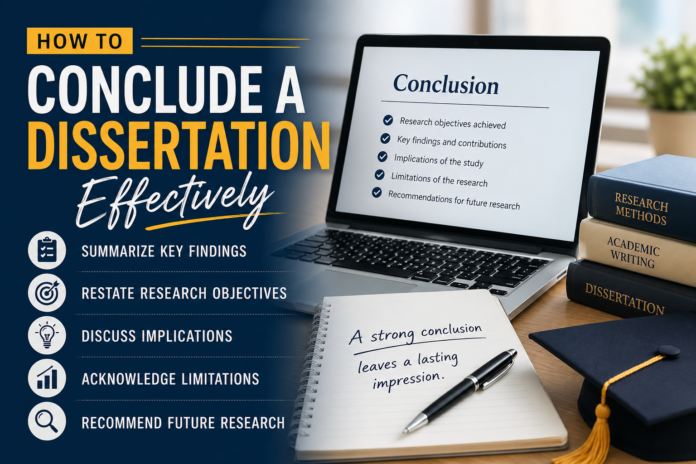
Concluding a dissertation is one of the most critical stages of the academic writing process, yet it is often underestimated by students. The conclusion is not merely a summary; it is your final opportunity to demonstrate the value of your research, reinforce your arguments, and leave a lasting impression on your readers. Understanding how to conclude a dissertation effectively can significantly impact how your work is perceived by examiners and academic audiences. A well-crafted conclusion ties together the entire study, highlights key findings, and emphasizes the broader implications of your research. In this comprehensive guide, you will learn how to conclude a dissertation effectively by structuring your conclusion strategically, presenting your insights clearly, and avoiding common pitfalls that weaken the final section.
Why the Conclusion Matters in a Dissertation
The Purpose of the Conclusion
The conclusion of a dissertation serves several essential purposes. First, it synthesizes the main findings of your research, ensuring that readers clearly understand what you have discovered. Second, it reinforces the significance of your study by connecting your results to the original research questions or objectives. Third, it demonstrates your critical thinking skills by reflecting on the implications of your findings. When you learn how to conclude a dissertation effectively, you ensure that your research ends with clarity and authority rather than confusion or repetition.
Creating a Lasting Impression
Your conclusion is the final section that examiners read, which makes it your last chance to influence their evaluation. A strong conclusion leaves readers with a sense of closure and satisfaction, while a weak one can undermine even the most well-researched dissertation. By focusing on how to conclude a dissertation effectively, you can present your work in a confident and compelling manner that highlights your academic competence.
Key Elements of an Effective Dissertation Conclusion
Restating the Research Aim and Objectives
One of the first steps in learning how to conclude a dissertation effectively is restating your research aim and objectives. This does not mean copying them word-for-word from your introduction. Instead, rephrase them to reflect the journey your research has taken and how your study has addressed them. This helps readers recall the purpose of your dissertation and understand how your findings align with your initial goals.
Summarizing Key Findings
A crucial component of how to conclude a dissertation effectively is summarizing your key findings. Focus on the most important results rather than attempting to include every detail. Highlight how your findings answer your research questions and contribute to your academic field. This section should be concise but impactful, ensuring that readers can clearly see the value of your work.
Linking Back to the Literature Review
Another important aspect of how to conclude a dissertation effectively is connecting your findings to the existing literature. Show how your research supports, contradicts, or expands upon previous studies. This demonstrates your ability to engage critically with academic sources and reinforces the relevance of your work within your field.
Structuring Your Dissertation Conclusion
Logical Flow and Organization
Understanding how to conclude a dissertation effectively involves organizing your conclusion in a logical and coherent manner. Start with a brief restatement of your research purpose, followed by a summary of findings, and then move on to implications and recommendations. Each section should flow naturally into the next, creating a clear narrative that guides the reader through your final thoughts.
Maintaining Clarity and Precision
Clarity is essential when learning how to conclude a dissertation effectively. Avoid introducing new ideas or complex arguments that were not discussed earlier in your dissertation. Instead, focus on presenting your conclusions in a straightforward and concise manner. This ensures that your readers can easily understand your key points without confusion.
Discussing the Implications of Your Research
Academic Implications
One of the most important aspects of how to conclude a dissertation effectively is discussing the academic implications of your findings. Explain how your research contributes to existing knowledge and what it means for future studies in your field. This demonstrates the relevance and significance of your work within the academic community.
Practical Implications
In addition to academic contributions, your conclusion should also address practical implications where applicable. Consider how your findings can be applied in real-world contexts, such as industry practices, policy development, or social issues. This adds depth to your conclusion and highlights the broader impact of your research.
Acknowledging Limitations
Why Limitations Matter
An essential part of how to conclude a dissertation effectively is acknowledging the limitations of your study. No research is perfect, and recognizing your study’s constraints demonstrates honesty and critical thinking. This could include limitations related to sample size, methodology, or data availability.
Framing Limitations Positively
While discussing limitations, it is important to present them in a constructive way. Instead of weakening your research, use them as opportunities to suggest areas for improvement or further investigation. This approach shows that you understand the complexities of research and are capable of evaluating your work objectively.
Providing Recommendations for Future Research
Identifying Research Gaps
Learning how to conclude a dissertation effectively involves identifying gaps that future researchers can explore. Based on your findings and limitations, suggest areas where further study is needed. This not only strengthens your conclusion but also contributes to the ongoing development of your field.
Offering Practical Suggestions
In addition to academic recommendations, consider offering practical suggestions for professionals or policymakers. This enhances the relevance of your research and demonstrates its potential impact beyond academia.
Writing Style and Tone in the Conclusion
Maintaining a Formal Academic Tone
When considering how to conclude a dissertation effectively, maintaining a formal and professional tone is essential. Avoid informal language, slang, or overly complex sentences. Your conclusion should reflect the academic rigor of your entire dissertation.
Being Concise Yet Comprehensive
Balancing conciseness with completeness is key to how to conclude a dissertation effectively. While your conclusion should not be overly long, it must still cover all essential elements. Focus on delivering clear and meaningful insights without unnecessary repetition.
Common Mistakes to Avoid
Introducing New Information
One of the most common mistakes students make when learning how to conclude a dissertation effectively is introducing new arguments or data. The conclusion is meant to summarize and reflect, not to present new ideas. Doing so can confuse readers and weaken the overall structure of your dissertation.
Repeating the Introduction
While it is important to restate your research aims, simply copying your introduction is not effective. Instead, provide a fresh perspective that reflects the insights gained from your research journey. This is where professional services like Essay Writing Assignments become invaluable.
Being Too Vague
Vague statements can undermine the strength of your conclusion. Ensure that your points are specific, clear, and supported by your research findings. This is a critical aspect of how to conclude a dissertation effectively. students need to avoid mistakes .
Practical Tips for Writing a Strong Conclusion
Plan Before You Write
Before drafting your conclusion, take time to plan its structure and key points. This helps ensure that your conclusion is organized and focused. Knowing how to conclude a dissertation effectively involves careful preparation and thoughtful writing. students also read about A complete guide to academic success.
Review and Revise
Once you have written your conclusion, review it carefully to ensure clarity, coherence, and accuracy. Editing is a crucial step in refining your work and enhancing its overall quality.
Seek Feedback
Getting feedback from supervisors or peers can provide valuable insights into how to conclude a dissertation effectively. They can help identify areas for improvement and ensure that your conclusion meets academic standards.
Final Thoughts on How to Conclude a Dissertation Effectively
Mastering how to conclude a dissertation effectively is essential for presenting your research in the best possible light. A strong conclusion not only summarizes your findings but also demonstrates the significance of your work, reflects on its implications, and provides direction for future research. By focusing on clarity, structure, and critical analysis, you can create a conclusion that leaves a lasting impression on your readers. Remember that your dissertation conclusion is your final opportunity to showcase your academic abilities, so it is worth investing the time and effort needed to get it right.

