


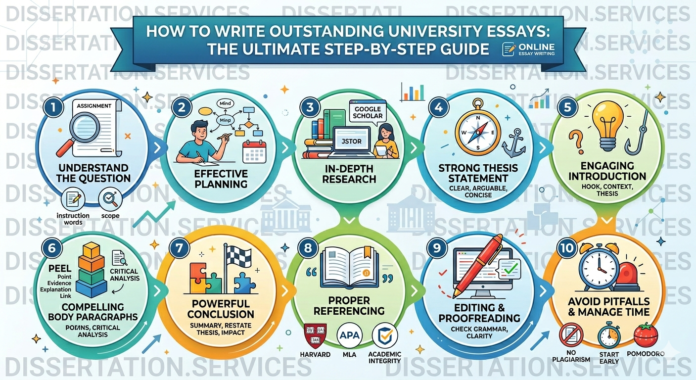
Writing university essays is one of the most essential academic skills students must master to succeed in higher education. Whether you are a first-year student or completing your final dissertation, understanding how to write university essays effectively can significantly impact your grades and overall academic performance. This ultimate guide is designed to provide you with a comprehensive, step-by-step approach to essay writing, ensuring that you not only meet academic standards but also produce high-quality, engaging, and well-structured content. By following this guide, you will learn how to plan, research, write, and refine your essays with confidence and clarity.
Understanding the Basics of University Essay Writing
What Is a University Essay?
A university essay is a formal piece of academic writing that presents an argument, analysis, or interpretation based on evidence and research. Unlike casual writing, university essays require a clear structure, critical thinking, and proper referencing. The goal is not just to present information but to demonstrate your understanding of a topic and your ability to engage with it critically. students also read how to read less but achieve academic goals.
Key Features of Academic Essays
When learning how to write university essays, it is crucial to understand their defining characteristics. Academic essays are structured, objective, evidence-based, and formal in tone. They avoid slang and personal bias while focusing on logical reasoning and well-supported arguments. Additionally, essays must follow a specific format, including an introduction, body paragraphs, and a conclusion. This is where professional services like Essay Writing Assignments become invaluable.
Types of University Essays
There are several types of essays you may encounter during your academic journey. These include argumentative essays, descriptive essays, analytical essays, and reflective essays. Each type has its own purpose and structure, but all require clarity, coherence, and strong evidence.
Planning Your University Essay Effectively
Understanding the Essay Question
Before you begin writing, it is essential to carefully analyze the essay question. Understanding what is being asked is the foundation of writing a successful essay. Look for keywords such as “analyze,” “discuss,” “compare,” or “evaluate,” as these indicate the type of response required. students also read about best tools for academic writing and research.
Conducting Research
Research is a critical step in how to write university essays effectively. Use credible academic sources such as journals, books, and reputable websites. Take detailed notes and organize your findings to ensure that your essay is well-supported with evidence.
Creating an Outline
An outline serves as a roadmap for your essay. It helps you organize your ideas logically and ensures that your arguments flow smoothly. A typical outline includes the introduction, main body points, supporting evidence, and conclusion.
Writing a Strong Introduction
Crafting a Hook
The introduction is the first impression your essay makes, so it must be engaging. Start with a hook, such as a thought-provoking question, a relevant quote, or an interesting fact, to capture the reader’s attention.
Providing Background Information
After the hook, provide some context to help the reader understand the topic. This may include definitions, historical background, or an overview of the issue.
Writing a Clear Thesis Statement
The thesis statement is the central argument of your essay. It should be clear, concise, and specific, outlining the main points you will discuss. A strong thesis guides the direction of your essay and helps maintain focus.
Developing the Body Paragraphs
Structuring Your Paragraphs
Each body paragraph should focus on a single main idea that supports your thesis. Start with a topic sentence, followed by supporting evidence and analysis. Ensure that each paragraph flows logically into the next.
Using Evidence Effectively
Evidence is crucial in academic writing. Use quotes, statistics, and examples from reliable sources to support your arguments. Always explain how the evidence relates to your main point.
Maintaining Coherence and Flow
To write university essays successfully, you must ensure that your ideas are connected. Use transition words and phrases to guide the reader through your arguments and maintain a logical flow.
Critical Analysis
Simply presenting information is not enough; you must analyze it. Discuss the significance of your evidence, compare different perspectives, and demonstrate your understanding of the topic.
Writing a Compelling Conclusion
Summarizing Key Points
The conclusion should summarize the main points of your essay without repeating them word for word. It should reinforce your thesis and highlight the significance of your arguments.
Restating the Thesis
Restate your thesis in a slightly different way to remind the reader of your main argument. This helps to bring your essay full circle.
Providing a Final Thought
End your essay with a strong closing statement. This could be a call to action, a recommendation, or a thought-provoking idea that leaves a lasting impression.
Editing and Proofreading Your Essay
Checking for Clarity and Structure
After writing your essay, review it to ensure that it is clear and well-structured. Check that each paragraph supports your thesis and that your ideas are presented logically.
Grammar and Spelling
Errors in grammar and spelling can undermine the quality of your essay. Use tools and manual proofreading to identify and correct mistakes.
Referencing and Citations
Proper referencing is essential in academic writing. Ensure that all sources are cited correctly according to the required style, such as APA, MLA, or Harvard.
Seeking Feedback
If possible, ask a peer or tutor to review your essay. Fresh perspectives can help identify areas for improvement.
Common Mistakes to Avoid in University Essay Writing
Lack of Planning
One of the biggest mistakes students make is starting their essays without proper planning. This often leads to disorganized and unclear writing.
Weak Thesis Statements
A vague or unclear thesis can weaken your entire essay. Always ensure that your thesis is specific and well-defined.
Overuse of Quotes
While evidence is important, relying too heavily on quotes can make your essay seem unoriginal. Balance quotes with your own analysis.
Ignoring the Question
Failing to address the essay question directly can result in lower grades. Always stay focused on the topic and ensure that your arguments are relevant.
Tips for Writing High-Quality University Essays
Manage Your Time Effectively
Time management is crucial when learning how to write university essays. Start early, set deadlines for each stage, and avoid last-minute work.
Practice Regularly
Writing is a skill that improves with practice. The more essays you write, the better you will become.
Read Academic Materials
Reading academic articles and essays can help you understand how to structure your writing and develop strong arguments.
Stay Organized
Keep your notes, sources, and drafts organized to make the writing process smoother and more efficient.
Conclusion: Mastering How to Write University Essays
Learning how to write university essays is a vital skill that will benefit you throughout your academic and professional life. By understanding the structure, conducting thorough research, and developing strong arguments, you can create essays that are clear, persuasive, and well-organized. This ultimate guide has provided you with the tools and techniques needed to excel in essay writing. Remember, success comes with practice, dedication, and a willingness to improve. By applying these strategies, you can confidently tackle any essay assignment and achieve academic excellence.

