


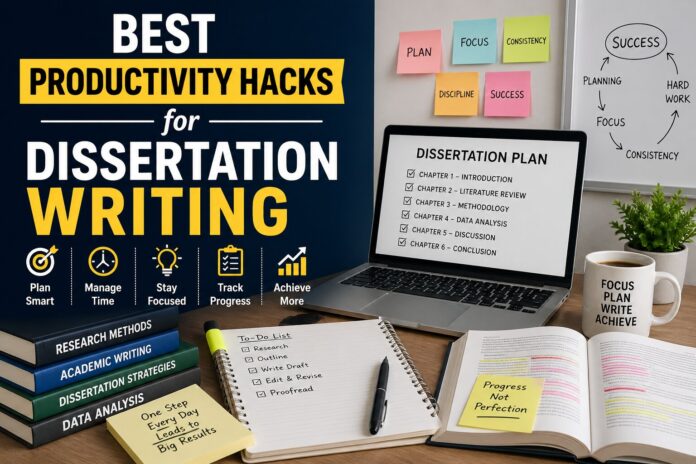
Writing a dissertation is one of the most demanding academic tasks students face, requiring not only subject expertise but also exceptional discipline, time management, and mental endurance. In 2026, with increasing academic pressures and digital distractions, mastering the best productivity hacks for dissertation writing has become more important than ever. Whether you are struggling to begin your dissertation or trying to stay consistent during the writing process, the right productivity strategies can significantly enhance your efficiency, reduce stress, and improve the overall quality of your work. This guide explores powerful and practical productivity hacks designed specifically for dissertation writing, helping you stay focused, organized, and motivated throughout your academic journey.
Understanding Productivity in Dissertation Writing
What Does Productivity Really Mean?
Productivity in dissertation writing does not simply mean writing more words in less time. Instead, it refers to producing high-quality academic content consistently while maintaining clarity of thought, coherence, and originality. Many students confuse busyness with productivity, but true productivity is about achieving meaningful progress toward completing your dissertation goals. students also read about how to write a literature review in 2026.
Why Students Struggle with Productivity
There are several reasons why students often struggle with productivity during dissertation writing. These include lack of clear goals, poor time management, procrastination, overwhelming research material, and mental fatigue. Additionally, distractions such as social media, multitasking, and lack of a structured routine can further hinder progress. Understanding these challenges is the first step toward implementing the best productivity hacks for dissertation writing.
Planning and Goal Setting
Break Your Dissertation into Manageable Tasks
One of the most effective productivity hacks for dissertation writing is breaking your dissertation into smaller, manageable tasks. Instead of viewing your dissertation as one massive project, divide it into chapters, sections, and subsections. This approach reduces overwhelm and allows you to focus on completing one task at a time. This is where professional services like Essay Writing Assignments become invaluable.
Set SMART Goals
Setting SMART (Specific, Measurable, Achievable, Relevant, Time-bound) goals can significantly improve your productivity. For example, instead of saying “I will work on my dissertation today,” set a clear goal like “I will write 800 words for Chapter 2 in three hours.” This clarity helps maintain focus and track progress effectively.
Create a Realistic Timeline
A well-structured timeline ensures that you stay on track throughout your dissertation journey. Allocate time for research, writing, editing, and proofreading. Be realistic about your pace and include buffer time for unexpected delays. Consistency is key when applying the best productivity hacks for dissertation writing. students also read about what make a high quality-Dissertation in 2026.
Time Management Techniques
Use the Pomodoro Technique
The Pomodoro Technique is a popular productivity method that involves working in focused intervals, typically 25 minutes, followed by a 5-minute break. After four sessions, take a longer break. This technique helps maintain concentration and prevents burnout, making it ideal for dissertation writing.
Prioritize Tasks Effectively
Not all tasks are equally important. Use prioritization methods such as the Eisenhower Matrix to categorize tasks based on urgency and importance. Focus on high-priority tasks first to ensure steady progress.
Avoid Multitasking
Multitasking may seem efficient, but it often reduces the quality of your work and increases errors. Instead, focus on one task at a time to enhance productivity and maintain clarity in your writing.
Creating an Optimal Writing Environment
Design a Distraction-Free Workspace
Your writing environment plays a crucial role in productivity. Choose a quiet, comfortable space where you can focus without interruptions. Keep your workspace organized and free from unnecessary clutter.
Limit Digital Distractions
Digital distractions are one of the biggest obstacles to productivity. Turn off notifications, use website blockers, and set specific times for checking emails and social media. Staying focused is essential when implementing the best productivity hacks for dissertation writing.
Use Productivity Tools
Leverage digital tools such as writing software, reference managers, and task management apps to streamline your workflow. These tools can help you organize research, track progress, and manage citations efficiently.
Research Efficiency
Develop a Clear Research Strategy
Effective research is the foundation of a strong dissertation. Start with a clear research question and identify relevant sources. Avoid collecting excessive information that may not be directly useful.
Organize Your Notes
Keeping your research notes organized can save a significant amount of time during the writing process. Use digital tools or notebooks to categorize information by themes or chapters.
Avoid Perfectionism in Research
Many students spend too much time trying to find the “perfect” source. Instead, focus on gathering credible and relevant information that supports your arguments. Perfectionism can slow down your progress and reduce productivity.
Writing Strategies for Maximum Output
Start with a Rough Draft
One of the best productivity hacks for dissertation writing is to start writing without worrying about perfection. A rough draft allows you to put your ideas on paper, which you can refine later during editing.
Write Consistently
Consistency is more important than intensity. Set a daily or weekly writing target and stick to it. Even writing a few hundred words each day can lead to significant progress over time.
Use Templates and Frameworks
Using predefined templates and frameworks can save time and ensure that your dissertation follows the required structure. This approach also helps maintain coherence and logical flow.
Staying Motivated
Set Milestones and Rewards
Breaking your dissertation into milestones and rewarding yourself for achieving them can boost motivation. For example, treat yourself after completing a chapter or reaching a word count goal.
Track Your Progress
Keeping track of your progress can provide a sense of accomplishment and encourage you to stay consistent. Use charts, journals, or apps to monitor your achievements.
Stay Connected with Support Systems
Engage with peers, mentors, or academic advisors who can provide guidance and encouragement. Sharing your progress and challenges can help you stay motivated and accountable.
Managing Stress and Burnout
Take Regular Breaks
Continuous work without breaks can lead to burnout. Schedule regular breaks to relax and recharge. Short walks, meditation, or light exercise can improve focus and productivity.
Maintain a Healthy Lifestyle
Your physical and mental health significantly impact your productivity. Ensure you get enough sleep, eat nutritious meals, and stay physically active.
Practice Mindfulness
Mindfulness techniques such as meditation and deep breathing can help reduce stress and improve concentration. Staying mentally calm is essential for effective dissertation writing.
Editing and Proofreading Efficiently
Edit in Stages
Instead of trying to perfect your dissertation in one go, edit it in stages. Focus on structure, content, grammar, and formatting separately to improve efficiency.
Use Editing Tools
Grammar and plagiarism-checking tools can help identify errors and improve the quality of your work. However, always review suggestions critically.
Seek Feedback
Getting feedback from supervisors or peers can provide valuable insights and help you identify areas for improvement. Constructive criticism is an important part of the writing process.
Leveraging Technology in 2026
Use AI Writing Assistants Wisely
In 2026, AI tools can assist with brainstorming, outlining, and editing. However, they should be used as support tools rather than replacements for your own critical thinking and originality.
Automate Repetitive Tasks
Automation tools can help with citation management, formatting, and data organization. This allows you to focus more on writing and analysis.
Stay Updated with Digital Trends
Keeping up with the latest productivity tools and techniques can give you an advantage in managing your dissertation efficiently.
Conclusion: Mastering the Best Productivity Hacks for Dissertation Writing
Mastering the best productivity hacks for dissertation writing is not about working harder but working smarter. By implementing effective planning, time management, research strategies, and writing techniques, you can significantly enhance your productivity and reduce stress. Creating a structured routine, maintaining a distraction-free environment, and staying motivated throughout the process are key factors in achieving success. Remember that dissertation writing is a marathon, not a sprint, and consistency is your greatest asset. With the right mindset and strategies, you can transform a daunting task into a manageable and rewarding academic achievement.

