



Writing a dissertation is one of the most important academic challenges students face at university. Whether you are completing an undergraduate degree, a Master’s programme, or a PhD, your dissertation plays a major role in determining your final grade and academic success. For many students in the UK, the process can feel overwhelming at first. Choosing a topic, conducting research, structuring chapters, and meeting strict university standards all require careful planning and academic discipline. Essay Writing Assignments
The good news is that writing a first-class dissertation is absolutely achievable when you understand the correct process. With proper preparation, strong research skills, and effective time management, students can produce high-quality academic work that stands out. First-Class Dissertation
This complete guide explains how to write a first-class dissertation in the UK, covering every major stage from topic selection to final proofreading. Whether you are just starting your dissertation or struggling to improve your draft, this guide will help you approach the process with confidence.

Understanding What a Dissertation Is
A dissertation is a long-form academic research project based on independent study. It allows students to investigate a specific topic in depth while demonstrating critical thinking, analytical ability, and subject knowledge. First-Class Dissertation
In UK universities, dissertations are commonly required for:
- Undergraduate degrees
- Master’s programmes
- PhD and doctoral research
Unlike regular assignments or essays, a dissertation involves original research, detailed analysis, and a structured academic argument. Universities expect students to follow strict academic guidelines, including referencing styles such as Harvard, APA, MLA, or OSCOLA.
A strong dissertation does more than summarise information. It presents a clear research question, evaluates evidence critically, and contributes meaningful insight to the chosen subject area. Online Essay Writing
First-Class Dissertation
Choosing the Right Dissertation Topic
One of the most important steps in dissertation writing is selecting the right topic. Your topic will shape your entire research process, so choosing carefully is essential.
A first-class dissertation topic should be: First-Class Dissertation
- Relevant to your subject area
- Interesting and manageable
- Researchable within your timeframe
- Supported by enough academic sources
- Specific enough to allow focused analysis
First-Class Dissertation Many students make the mistake of choosing topics that are either too broad or too narrow. A broad topic can make research confusing, while an overly narrow topic may leave you with limited sources.
For example:
Too broad:
“The Impact of Technology on Education”
More focused:
“The Impact of Artificial Intelligence Tools on Academic Writing Among UK University Students”
When selecting your topic, discuss your ideas with your supervisor. Their feedback can help refine your research direction and improve the quality of your dissertation from the start.
Understanding UK University Requirements
First-Class Dissertation Every university in the UK has its own dissertation guidelines. Before you begin writing, carefully review your department handbook and assessment criteria.
Pay attention to:
- Word count requirements
- Referencing style
- Formatting guidelines
- Submission deadlines
- Research ethics policies
- Marking criteria
Understanding these requirements early can prevent major mistakes later in the process.
Students aiming for first-class grades should study previous high-scoring dissertations if available. This helps you understand the level of depth, structure, and academic tone expected by UK universities.
Creating a Strong Dissertation Proposal
Most UK universities require students to submit a dissertation proposal before starting the full project. The proposal outlines your research plan and demonstrates that your topic is academically worthwhile.
A strong dissertation proposal usually includes:
Introduction
Explain the research topic and its importance.
Research Aim and Objectives
Clearly define what your study aims to achieve.
Literature Review Overview
Summarise existing research related to your topic.
Research Methodology
Explain how you plan to collect and analyse data.
Timeline
Provide a realistic schedule for completing your dissertation.
A well-written proposal creates a strong foundation for the rest of your research project.
Conducting Effective Academic Research
Research is the backbone of any successful dissertation. High-quality research strengthens your arguments and demonstrates academic credibility.
Students in the UK should rely on trusted academic sources such as:
- Google Scholar
- JSTOR
- ScienceDirect
- ResearchGate
- University library databases
Avoid relying heavily on blogs, random websites, or Wikipedia. Academic research should be evidence-based and scholarly.First-Class Dissertation
When researching, focus on:
- Peer-reviewed journal articles
- Academic books
- Government reports
- Industry publications
- Credible statistical data
Take organised notes during research and record all references carefully. This will save time when creating your bibliography later.First-Class Dissertation.
Writing an Effective Literature Review
The literature review is one of the most important chapters of a dissertation. It shows your understanding of existing research and identifies gaps in current knowledge.
A first-class literature review should:
- Compare different academic viewpoints
- Critically evaluate previous studies
- Identify trends and debates
- Highlight gaps in the research
- Connect existing research to your study
Avoid simply summarising sources one after another. Instead, organise your literature review thematically and analyse how studies relate to each other.
Critical analysis is essential. Universities in the UK value students who can evaluate research rather than just describe it.First-Class Dissertation.
Choosing the Right Research Methodology
Your methodology explains how you conducted your research. This section should justify your chosen methods and demonstrate academic reliability.
The two main research approaches are:
Qualitative Research
Focuses on opinions, experiences, and meanings through interviews, observations, or case studies.
Quantitative Research
Focuses on numerical data, surveys, and statistical analysis.
Some dissertations also use mixed methods, combining both qualitative and quantitative approaches.
Your methodology chapter should explain:
- Research design
- Data collection methods
- Sampling techniques
- Ethical considerations
- Data analysis process
- Limitations of the study
A clear methodology strengthens the credibility of your findings.
Structuring Your Dissertation Properly
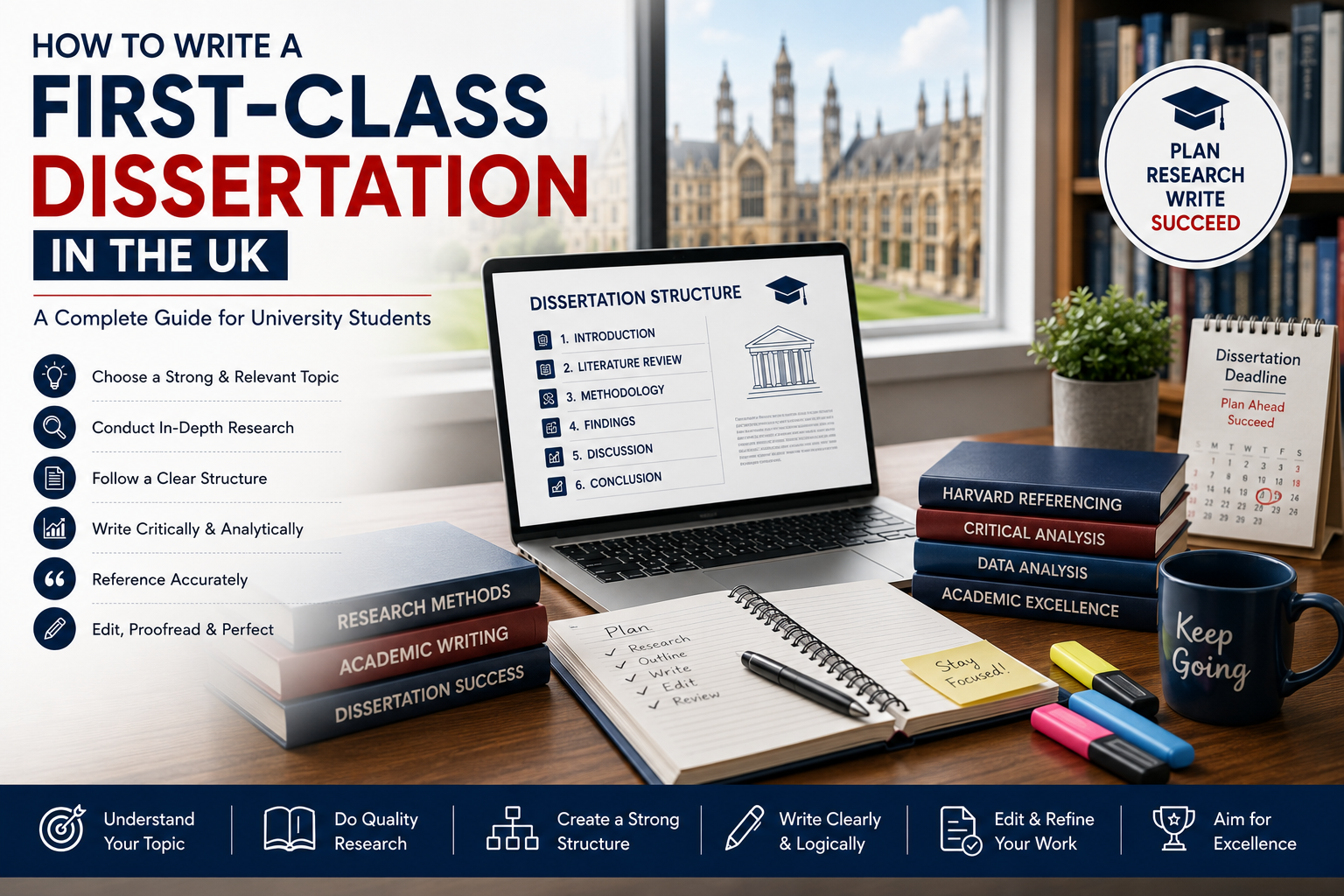
A well-structured dissertation improves readability and academic quality. Although structures vary by subject, most UK dissertations follow this format:
Title Page
Contains the dissertation title, student name, university details, and submission date.
Abstract
A brief summary of the research, findings, and conclusions.
Introduction
Introduces the topic, research question, and objectives.
Literature Review
Analyses previous research related to your topic.
Methodology
Explains your research methods.
Findings and Analysis
Presents and analyses research results.
Discussion
Interprets findings and connects them to existing literature.
Conclusion
Summarises key findings and recommendations.
References
Lists all sources used in the dissertation.
Appendices
Includes additional material such as questionnaires or interview transcripts.
Strong organisation makes your dissertation easier to follow and improves academic presentation.
Improving Academic Writing Style
Academic writing should be formal, clear, and analytical. Many students lose marks because of weak writing style rather than poor ideas.
To improve your writing:
- Use clear and concise language
- Avoid informal expressions
- Support claims with evidence
- Maintain logical flow between paragraphs
- Use topic sentences effectively
- Avoid repetition
Critical thinking is especially important. Instead of simply describing information, analyse and evaluate it.
For example:
Weak:
“Many researchers believe social media affects students.”
Stronger:
“Recent studies suggest that excessive social media use negatively affects student concentration and academic productivity.”
Clear and precise writing helps create a professional academic impression.
Managing Time Effectively
Poor time management is one of the biggest reasons students struggle with dissertations. Writing a first-class dissertation requires consistent progress over several months.
Create a realistic schedule that includes:
- Research deadlines
- Chapter completion dates
- Editing periods
- Supervisor meetings
- Proofreading time
Avoid leaving writing until the last minute. Strong dissertations are developed through drafting, feedback, and revision.
Breaking the project into smaller tasks makes the workload more manageable and reduces stress.
Avoiding Plagiarism
Plagiarism is taken extremely seriously by UK universities. Students must ensure that all sources are properly referenced.
To avoid plagiarism:
- Cite all borrowed ideas and quotations
- Use proper referencing style consistently
- Keep track of sources during research
- Paraphrase correctly
- Use plagiarism detection tools before submission
Academic integrity is essential for achieving high marks and maintaining university standards.
Editing and Proofreading Your Dissertation
Editing is where good dissertations become excellent. Never submit your first draft without reviewing it carefully.
Effective proofreading includes checking:
- Grammar and spelling
- Sentence clarity
- Formatting consistency
- Referencing accuracy
- Logical flow
- Chapter transitions
Reading your dissertation aloud can help identify awkward phrasing and unclear arguments.
Many students also use professional dissertation editing services to improve clarity and eliminate technical mistakes before final submission.
Working Effectively With Your Supervisor
Your dissertation supervisor can provide valuable guidance throughout the research process. Students who communicate regularly with supervisors often produce stronger dissertations.
To build a productive relationship:
- Attend meetings prepared
- Ask clear questions
- Accept constructive feedback
- Submit work on time
- Show consistent progress
Supervisors appreciate students who are organised and proactive.
Common Dissertation Mistakes to Avoid
Many students repeat the same mistakes during dissertation writing. Avoiding these errors can significantly improve your final grade.
Common mistakes include:
- Choosing weak research questions
- Poor time management
- Weak literature reviews
- Lack of critical analysis
- Inconsistent referencing
- Ignoring feedback
- Weak proofreading
Being aware of these issues early can help you produce more polished academic work.
Final Tips for Achieving a First-Class Grade
A first-class dissertation requires more than hard work. It requires strategic planning, critical thinking, and attention to detail.First-Class Dissertation
Successful students typically:
- Start early
- Stay organised
- Conduct thorough research
- Maintain consistent communication with supervisors
- Edit carefully.First-Class Dissertation
- Focus on academic quality rather than rushing
Remember that dissertations are not written perfectly in one attempt. Strong academic writing develops through drafting, revising, and improving over time.
Conclusion
Writing a first-class dissertation in the UK may seem challenging, but with the right approach, it becomes far more manageable. From selecting a strong topic and conducting detailed research to refining your writing and proofreading carefully, every stage of the process contributes to your final result.First-Class Dissertation
The key to success lies in preparation, or ganisation, and critical thinking. Students who plan effectively and maintain academic discipline are far more likely to achieve excellent results.First-Class Dissertation
First-Class Dissertation If you need additional guidance, professional support, or dissertation editing assistance, exploring reliable academic support services can help you improve the quality of your work while staying aligned with UK university standards.First-Class Dissertation
Suggested Internal Links:
- Dissertation Editing Services
- Research Proposal Writing Help
- PhD Thesis Writing Support
- Academic Proofreading Services
- Assignment Writing Help


[…] The Ultimate Guide to Writing a First-Class Dissertation in the UK […]